

Affordable Rubber Mats for Horse Stables: What to Buy, What to Avoid & What Actually Lasts

Looking for equine rubber mats for horse stables usually starts with one very normal question:
“What are people using, and where can I buy affordable ones?”
Fair question. Horses are expensive enough already. Between feed, bedding, farriers, vets, float maintenance, fencing, buckets mysteriously destroyed overnight, and that one horse who believes rugs are single-use items, it makes sense to look for a practical flooring option that does not blow the budget.
The trick is this:
Affordable stable flooring is not always the cheapest mat you can find online.
A cheap mat might save money on day one, but if it moves, curls, traps urine, becomes slippery, needs bolting down, smells, hardens, or needs replacing much sooner than expected, it can quickly become the more expensive option.
So, let’s break it down properly.
What rubber mats do people use for horse stables?
Most horse owners and equine facilities use one of four main types of rubber flooring:
1. Loose-lay rubber stable mats
2. Glue-down rubber mats or rolls
3. Interlocking rubber tiles or pavers
4. Heavy-duty equine tiles for compacted bases
Each can work well, but only when it suits the base, the horse, the use of the area, and the level of cleaning required.
A stable box is not the same as a wash bay. A concrete floor is not the same as compacted road base. A quiet private stable is not the same as a racing stable, vet hospital, spelling complex or busy agistment centre.
That is why choosing stable mats by price alone can be risky.
The big mistake: buying “rubber mats” instead of equine flooring
This is where a lot of people get caught.
 Image Above: Budget industrial vulcanised matting
They search “rubber mats near me” or “cheap stable mats” and find something that looks suitable. It might be a gym mat, workshop mat, ute mat, recycled rubber sheet, generic imported tile, vulcanised mat or general-purpose rubber flooring.
It may look fine in the photo.
But horses are not gym equipment.
A horse stable floor needs to handle:
· Hoof impact
· Pawing
· Twisting
· Lying down and getting up
· Urine
· Bedding
· Water
· Disinfectants
· Daily mucking out
· Heavy cleaning
· Moisture
· Long-term compression
· Hot, cold, wet and dry conditions
A mat that is “rubber” is not automatically suitable for horses.
The right equine rubber flooring should feel secure under hoof, reduce concussion, stay stable, clean easily, and suit the base underneath it.
“Affordable” should mean low cost over time
There are two kinds of affordable.
 Image Above: Unsuitable/ Slippery vulcanised matting in wash bay
1. Cheap upfront
This is the mat that looks like a bargain today.
It might be thinner, lighter, harder, made for general use, difficult to clean, prone to movement, or not designed for a stable environment.
2. Affordable long-term
This is the system that costs more than the cheapest option upfront, but saves money and stress over time.
It can reduce bedding use, reduce muck-out time, improve comfort, reduce slip risks, last longer, and avoid constant patching, lifting, trimming or replacing.
For most horse owners, the second type is the one that actually feels affordable after a few years.
Because stable flooring is not just a product cost. It affects your bedding bill, cleaning time, horse comfort, odour control, safety and maintenance.
Why cheap stable mats can become expensive
Cheap mats can work in some low-use situations, but there are a few warning signs to watch for.

Lightweight mats that move
If a mat moves, it creates gaps. Gaps collect bedding, urine, manure and water. Once that happens, the stable can start to smell, the subfloor can become dirty, and cleaning becomes much harder.
Mats that curl or lift
Lifted edges are more than annoying. They can create trip points for horses and handlers.
Mats that need bolts or metal strips
If a mat needs to be screwed or bolted down to stay in place, it may not be the right mat for the job.
Metal fixings can loosen, rust, trap moisture, create sharp points, and make proper cleaning harder. In a hoof-traffic area, that is not ideal.
A good stable flooring system should be stable because the product and installation method are right — not because it has been pinned down with hardware.
Mats with aggressive raised patterns
Some budget mats rely on raised patterns for grip. This can look great at first, but deep patterns can hold soap, manure, grit and grime, especially in wash bays. Over time, the pattern can wear down and become harder to clean and slippery.
For equine areas, grip should come from the right textured rubber surface and product design, not just a harsh pattern.
Mats not made for equine use
Multi-purpose rubber mats can be fine for garages, gyms, trailers or workshops. But stables, wash bays and horse walkways are different environments.
If the mat is not designed for horses, ask:
Will it stay stable under hoof? Will it clean properly? Will it cope with urine and water? Will it remain comfortable? Will it last outside? Will it be durable enough?
If those answers are unclear, keep looking.
So, what should I buy for a horse stable?
The best option depends on what your stable floor is built on.
Here is the simple version.
If your stable has concrete or asphalt
For a hard base like concrete or asphalt, a bonded rubber roll system is often the cleanest and most professional option.
 Image: Equiline Aussie Gold in a stable
Best fit: REGUPOL Equiline Aussie Gold
Secondary fit: REGUPOL Equiline Edge - 15mm - 1m x 1m
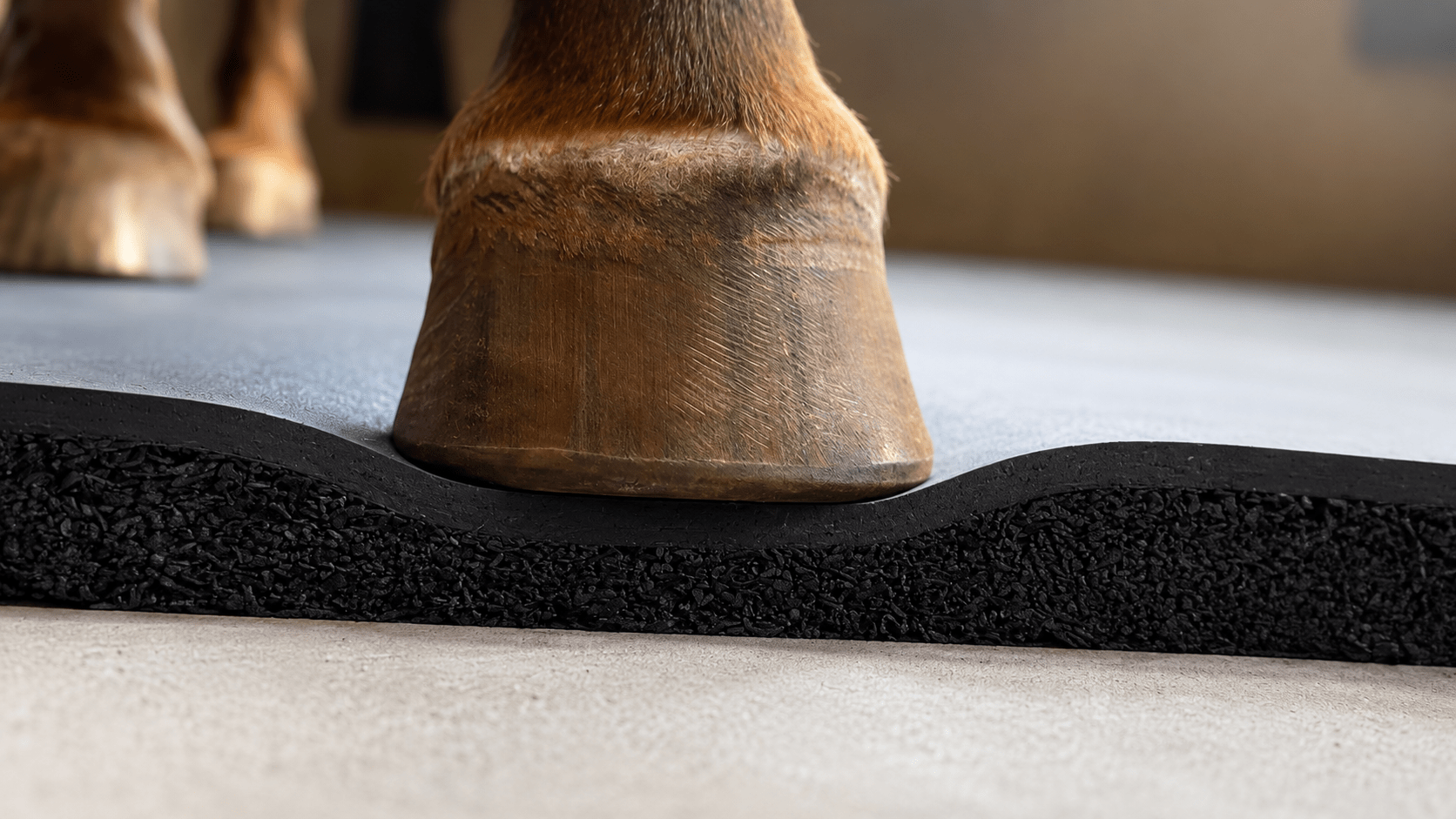
REGUPOL Equiline Aussie Gold is a glue-down rubber flooring option designed for horse stables, wash bays, walkways and high-traffic equine areas.
REGUPOL Equiline Edge 15 mm can also be considered as a secondary option for concrete or asphalt areas, especially where customers want a purpose-built equine tile format with a clean, professional finish. Supplied as 1 m x 1 m bevelled edge tiles, Equiline Edge offers a practical stable flooring option with comfort, safety and reliability in mind.
Aussie Gold is a great choice when you want:
· A stable, fixed floor
· Fewer loose edges
· Easy cleaning
· Strong wet and dry grip
· Comfort under hoof
· Noise reduction
· A more professional stable finish
· Less bedding required
· No screws, bolts or metal fixings
For private stables, racing facilities, vet hospitals, wash bays and stable aisles, Aussie Gold is often the “do it once, do it properly” option.
It is especially useful when hygiene matters. A bonded system helps reduce the places where urine, bedding and grime can work underneath the surface.
If you want a mat to place over concrete or asphalt
Not everyone wants to glue flooring down. Sometimes you want a quicker install, a moveable option, or a solution that can be changed later.
This is where Equiline Edge 15 mm can be a smart option.
Equiline Edge is a 15 mm thick, 1 m x 1 m bevelled edge tile designed as a purpose-built equine rubber floor for hard surfaces such as concrete or asphalt. It gives customers a practical, comfortable and reliable stable mat option without jumping straight to a bonded roll system.
It is a strong choice when you want:
· A non-glued rubber mat over concrete or asphalt
· A clean, professional stable appearance
· Comfort under hoof
· Better durability than general-purpose matting
· A stable surface without bolts, screws or metal fixings
· A more affordable entry point into proper equine flooring
· A product designed for horses, not gyms, workshops or general use
This is an important difference.
Cheap gym matting is usually designed for softness, cushioning and human impact. That does not automatically make it suitable for heavy horses. Horses need comfort, but they also need durability, grip, stability and a surface that can handle hoof pressure, moisture, bedding, cleaning and daily stable use.
Equiline Edge gives customers a more suitable middle ground: a good-looking, equine-purpose rubber floor at a very reasonable price point, without relying on unsuitable generic mats that were never really designed for stable life.
If you want a heavy loose-lay option over concrete
Not everyone wants to glue flooring down. Sometimes you want a quicker install, a moveable option, or a solution that can be changed later.
That is where heavy loose-lay equine tiles can make sense.

Best fit: Multi XL 30 mm or Stable 40 mm
REGUPOL Equiline Multi XL 30 mm is a large-format, loose-lay tile option suited to equine areas where you want mass, comfort and fewer joins.
REGUPOL Equiline Stable 40 mm is a thicker, cushioned tile designed for comfort, drainage and stable use.
These are better choices than lightweight general-purpose mats because their thickness and weight help them stay stable without needing dangerous fixings.
Use these when you want:
· Quick installation
· Comfort under hoof
· A loose-lay system
· Fewer movement issues
· A stable surface without bolts or screws
· A practical option for stables, wash bays or day yards
If your stable is on compacted road base or crushed rock
This is where many people make the wrong choice.
Thin mats over a soft or uneven base can move, flex, lift or become uneven. If the base is not firm and properly prepared, the mat has to do too much work.
For compacted surfaces, you generally want a thicker, heavier equine tile.
 Image Above: REGUPOL Equiline Stable Mat
 Image above: Equiline Multi XL
Best fit: Multi XL 30 mm or Stable 40 mm
For compacted road base, crushed rock or prepared natural bases, REGUPOL Equiline Multi XL 30 mm and REGUPOL Equiline Stable 40 mm are strong options.
They provide the weight, comfort and stability needed for a non-bonded installation when the base is prepared correctly and edges are properly restrained.
This can be a smart choice for:
· Stables
· Day yards
· Open shelters
· Breezeways
· Wash areas
· Temporary or flexible layouts
The key is base preparation. A good rubber floor still needs a good foundation.
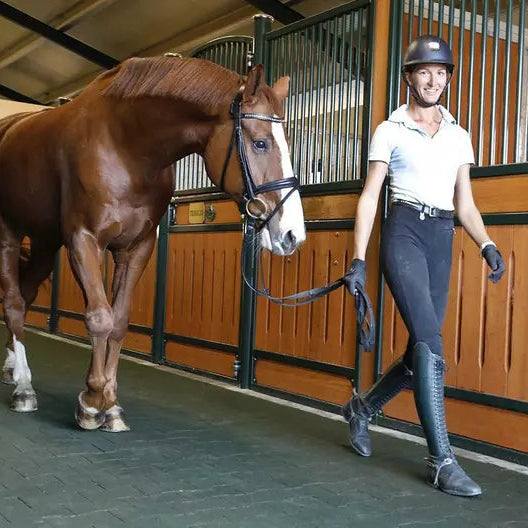
If you need walkways, aisles or breezeways
Stable flooring is not only about the box. Horses also need safe movement areas.
Walkways, aisles and breezeways are where slips, noise and nervous behaviour can become a problem, especially with shod horses on hard surfaces.

Best fit: Walkway 21 mm or Walkway 43 mm
REGUPOL Equiline Walkway 21 mm is ideal for glue-down installation over concrete or asphalt.
REGUPOL Equiline Walkway 43 mm is a heavier-duty paver option that can suit areas where extra cushioning, durability and visual finish are important.
These are great for:
· Stable aisles
· Breezeways
· Wash bay approaches
· Parade areas
· Vet pathways
· Loading zones
· Walkways between stables and arenas
They create a more confident surface under hoof and a quieter, calmer environment.
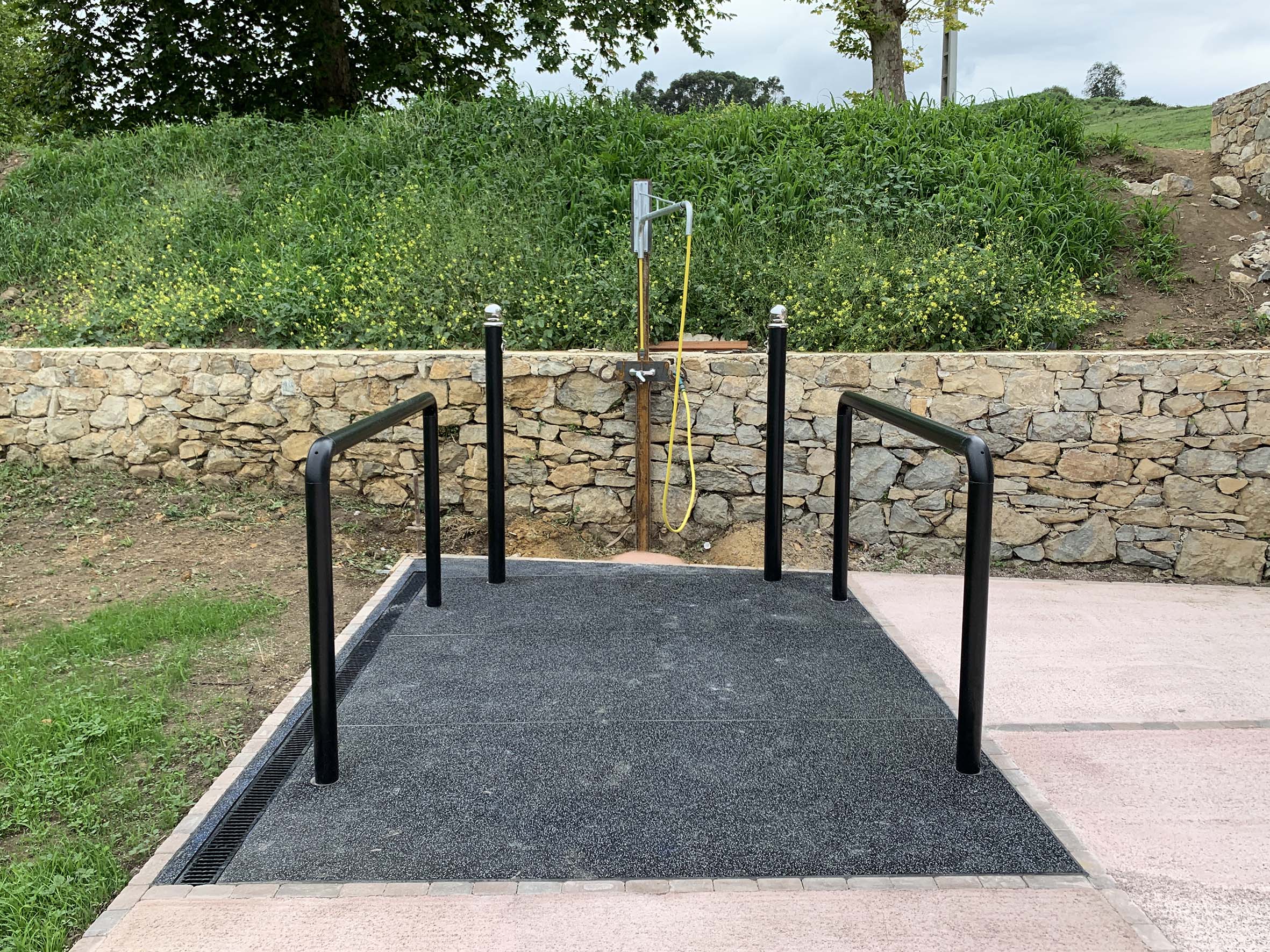
What about wash bays?
Wash bays are harder on flooring than many people realise.
You have water, shampoo, disinfectant, manure, hair, grit and horses shifting their weight while wet. That is a tough combination.
For wash bays, avoid cheap mats that move, curl, trap water, or rely on screws and metal strips to stay down.
Good wash bay flooring should be:
· Non-slip in wet conditions
· Easy to hose and clean
· Comfortable under hoof
· Stable without dangerous fixings
· Suitable for the base underneath
· Able to handle regular moisture
For concrete or asphalt wash bays, Aussie Gold is a strong glue-down option.
For compacted bases or loose-lay situations, Multi XL 30 mm or Stable 40 mm can be a better fit.
 Image Above: REGUPOL Equiline Stable in wash bay

Image Above: REGUPOL Equiline Aussie Gold in wash bay
Do rubber stable mats mean I can stop using bedding?
Sometimes bedding can be reduced significantly, but the answer depends on the horse, stable design, drainage, climate and management style.
Rubber flooring can reduce the amount of bedding needed because the horse is no longer standing or lying directly on hard concrete, dirt or compacted base.
However, many owners still use bedding for:
· Absorption
· Warmth
· Comfort
· Stable routine
· Urine management
· Horse preference
The big saving is that you may not need a huge deep bed to compensate for a hard floor.
That is where rubber flooring can quietly pay for itself.
Less bedding can mean:
· Lower bedding costs
· Faster mucking out
· Less waste to dispose of
· Cleaner stables
· Less dust
· Less time spent dragging bags, bales and barrows around
And honestly, any product that reduces wheelbarrow time deserves respect.
The “cheap mat” checklist
Before buying any stable mat, ask these questions:
Is it designed for horses?
Not just animals. Not just gyms. Not just “heavy duty.” Horses.
Is it suitable for my base?
Concrete, asphalt, timber, compacted road base and natural ground all need different approaches.
Will it stay in place without bolts?
If the answer is no, think carefully.
Will it clean properly?
If urine and bedding can get underneath, the upfront saving may disappear quickly.
Is it comfortable enough?
A hard rubber mat is still hard if it is not designed for long-term equine comfort.
Is it slip-resistant when wet?
Dry grip is not enough for wash bays or outdoor areas.
Is there local support?
When you are buying stable flooring, it helps to deal with people who understand horses, bases, installation and Australian conditions.
Where can I buy affordable rubber mats for stables in Australia?
You can buy rubber stable mats from many places: rural supply stores, online marketplaces, matting suppliers, equine retailers and specialist flooring companies.
But if you are comparing options, do not compare on square metre price alone.
Compare the full system:
· Product suitability
· Thickness
· Weight
· Grip
· Comfort
· Drainage
· Base compatibility
· Installation method
· Cleaning requirements
· Expected lifespan
· Bedding reduction
· Safety
· Local advice
· Freight
· Warranty and support
The cheapest mat is only cheaper if it performs.
If it shifts, smells, lifts, traps waste, needs bolting, or gets replaced early, it may not have been affordable at all.
A simple way to choose the right floor
No single mat suits every part of an equine facility.
A stable box has different needs to a wash bay. A compacted base is different to a concrete slab. A busy racing stable is different to a private backyard stable.
The smarter approach is to match the product to the area: bonded rolls for hard-base hygiene, bevelled edge tiles for a simple non-glued hard-base mat, thicker loose-lay tiles for prepared bases, and purpose-built walkway pavers for horse movement areas.
Final answer: what should you use?
If you want the simplest answer:
Use rubber flooring that is actually designed for horses, matched to your base, and stable without risky fixings.
For concrete or asphalt stables, a bonded rubber roll system is often the best long-term choice.
For customers who want a non-glued mat over concrete or asphalt, a 15 mm bevelled edge equine tile offers a practical middle ground.
For compacted bases or loose-lay areas, thicker equine tiles are usually a better fit than thin, lightweight mats.
For walkways, breezeways and aisles, use a purpose-built equine walkway product rather than trying to force stable mats into the wrong application.
Cheap mats may look affordable, but the real value is in a floor that stays safe, comfortable, clean and easy to manage year after year.
Your horse gets a better surface.
You get less maintenance.
Your stable smells better.
Your bedding bill gets a chance to calm down.
Everyone wins.
Need help choosing the right stable mat?
Not sure whether you need glue-down rolls, loose-lay tiles or interlocking pavers?
Speak with the REGUPOL Australia equine flooring team via the contact us or get a quote function on this website and tell us:
· What area you are flooring
· Your base type
· Whether it is wet or dry
· How many horses use the area
· Whether you want glue-down or loose-lay
· Your approximate measurements
We can help point you toward the right REGUPOL equine flooring option for your stable, wash bay, walkway or full facility.