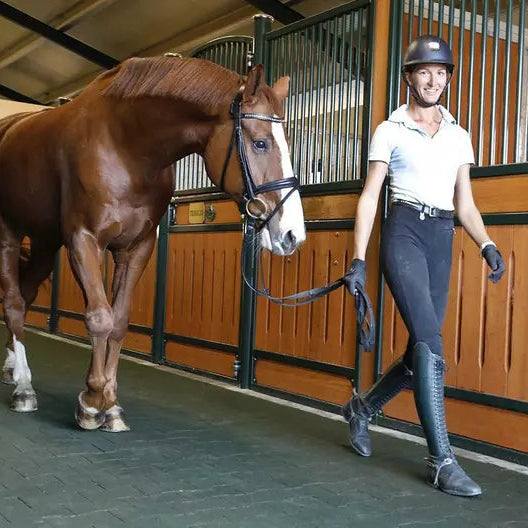


WHAT RUBBER FLOORING IS BEST FOR STABLES AND WASH BAYS IN AUSTRALIA?
Stables and wash bays are two of the hardest-working areas on any equine property. One gets constant hoof traffic and long stand times, the other gets regular wash-downs, moisture, and detergents. If the flooring is wrong, you usually notice it fast through slipping, shifting mats, trapped moisture and odours, or a surface that is simply hard to keep clean.
This blog breaks down what to look for in rubber flooring for both areas, how the base you are installing over changes the best option, and the key differences between glue-down systems on concrete or asphalt versus loose-lay tiles over compacted crushed rock or natural bases.

Why does the right stable floor matter for comfort and long term soundness?
Stable flooring is not just about stopping slips. Horses stand for long periods, and a hard surface can mean more fatigue, more shifting, and less comfort.
A properly elastic rubber floor helps by:
• Cushioning hoof strike and reducing the harshness of standing on concrete
• Supporting joint and muscle comfort by reducing impact and standing stress
• Reducing fatigue for horses that stand for long periods
• Encouraging better rest and a calmer stable routine
This is one of the biggest differences between premium equine rubber and budget matting. A permanently elastic surface is designed to stay forgiving under hoof while still being durable for daily use.
What base are you installing over?
This is the decision point that matters most.
Are you on a hard base?
Concrete or asphalt.


Are you on a natural base?
Crushed rock, road base, decomposed granite, compacted soil, or a properly prepared rock/sand base.

Once you know this, the best format becomes obvious.
What rubber flooring is best for stables and wash bays on concrete or asphalt?
If you are on concrete or asphalt and hygiene is a priority, glue-down is usually the cleanest long-term result. It removes the biggest problem in wet horse areas: contamination and moisture tracking underneath the rubber where you cannot properly wash it out.

Why do glue-down systems work so well in these areas?
• The surface stays stable and flat with no mat creep
• Wash-down is simpler because you are cleaning one continuous surface
• It supports better hygiene in wash bays, stable rows, tie-up areas and ramps
• It can reduce noise and harshness compared to bare concrete
Which glue-down options suit stables and wash bays best?
REGUPOL Equiline Aussie Gold
A premium roll product designed for glue-down installs over concrete or asphalt in high-traffic equine areas, including wash bays and stables. When installed correctly it creates a sealed, hose-friendly surface that is easy to keep clean.
Horse Stall Mats — Aussie Gold 12 mm | REGUPOL
REGUPOL Equiline Edge
A versatile tile option that can be loose-laid or glued down depending on the area and budget. The bevelled edges help create a neat finish and reduce trip points, making it a tidy option for stables, aisles and wash bays.
Rubber Horse Stall Tiles — Edge 15 mm | REGUPOL
What should a good glue-down install include?
Keep it simple, but do it properly:
• a sound, clean substrate that is properly prepared
• falls to drainage so water does not pool
• correct moisture management where required
• the right polyurethane adhesive system
• tight joins and a clean edge finish so water cannot track underneath
What rubber flooring is best for stables and wash bays on crushed rock or natural bases?
If your stables or wash bays are built on compacted crushed rock, road base, or natural ground, loose-lay is often the most practical approach.
What thickness should loose-lay stable tiles be?
As a general rule, aim for a minimum of 30 mm thickness for stability and comfort. That is where tiles typically have enough mass to sit flatter, resist movement and feel supportive under hoof as natural bases settle over time.

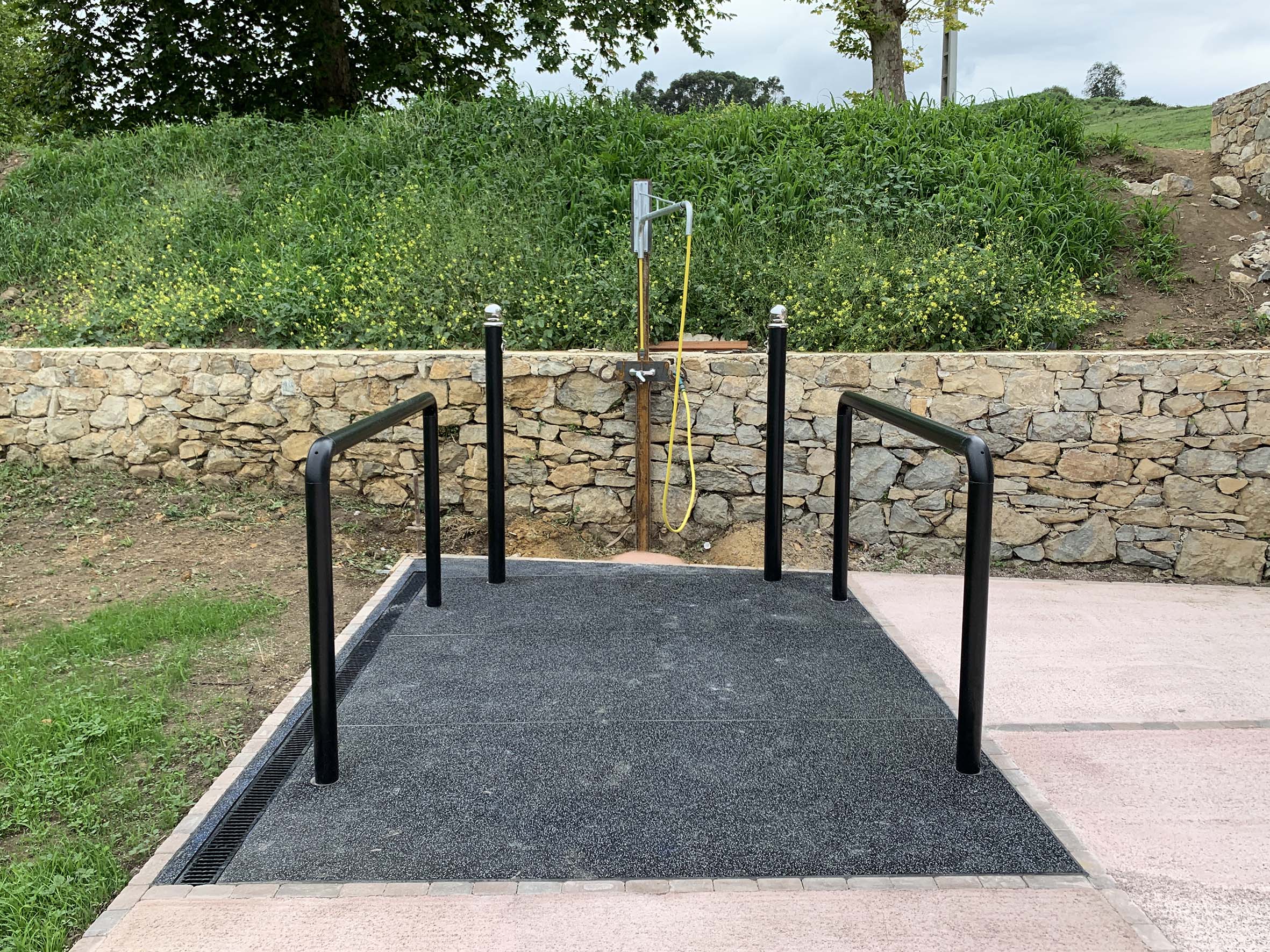
Pictured above: REGUPOL Equiline Multi XL over compacted base
Why do natural bases often work well with loose-lay tiles?
A properly built crushed rock base acts like a drainage and filtration layer. In many well-built stables, moisture management is happening as part of the base design, which is why natural-base installs often do not require routine lifting and washing underneath the tiles. The day-to-day wins come from consistent cleaning on top and good base preparation underneath.

Pictured above: REGUPOL Stable over compacted road base
Which loose-lay options suit natural bases best?
REGUPOL Equiline Multi XL - 30mm -
A heavy XL format tile designed to be loose-laid thanks to its own weight. It suits stables, stable rows and wet zones on compacted bases, and the larger format helps reduce joins and speeds up installation.
Large Horse Stall Tiles — Multi XL 30 mm | REGUPOL
REGUPOL Equiline Stable - 40mm
A thicker, softer option designed for stall comfort and moisture management. The studded underside is designed to support drainage performance and help reduce moisture build-up and odour issues, while maintaining high slip resistance and permanent elasticity.
Rubber Horse Stall Tiles — Stable 40 mm | REGUPOL
Do you need to lift loose-lay tiles to clean underneath?
This depends on what the tiles are sitting on.
If tiles are on compacted crushed rock or a natural base
With a properly prepared base that drains and filters, there is generally no routine need to lift tiles for cleaning underneath.
If tiles are on concrete
If the slab has poor falls or you're using budget bolt-down mats and water regularly seeps under the edges, an occasional lift and clean may be needed. Not daily, just as required.
If you want to minimise that risk:
• Move to a glue-down system with REGUPOL Equiline Aussie Gold or REGUPOL Equiline Edge
• Or use a REGUPOL tile designed to better manage the underside interface on hard surfaces, such as REGUPOL Equiline Stable with its studded underside
Should you use metal fixings or screws/bolts to hold mats down?
In most horse areas, it is better to avoid metal fixings.
Here is why:
• They can be dangerous if anything works loose or creates a hard edge in a hoof traffic line
• They create trip hazards, especially after you remove and reinstall, because it is difficult to get the floor perfectly flat again
• They trap moisture and bacteria underneath by creating gaps, crevices, and penetration points that are hard to clean
• They make deep cleaning harder because people avoid lifting a floor that is pinned down, and when you do lift it, reinstalling without new hazards is rarely simple
• They can rust over time in wash bays and wet stable areas, which can stain surfaces, seize hardware in place, and create sharp or rough edges where you least want them
If a floor needs bolts to behave, it is usually the wrong product for the base, too light for the job, or missing proper borders and restraint.

Pictured above: Budget vulcanised rubber mats with a rusting screw
What are the most common mistakes people make with stable and wash bay flooring?
• Choosing thin, lightweight mats for loose-lay on crushed rock and then fighting movement and gapping later
• Skipping base preparation, because rubber can only perform as well as what it sits on
• No border or edge restraint on loose-lay installs, so tiles slowly creep and open gaps
• Using the wrong adhesive approach on concrete/asphalt or ignoring moisture management
• Using metal fixings to solve a product mismatch instead of choosing the right system
So what is the best REGUPOL setup for most stables and wash bays?
If the area is concrete or asphalt, and you want the cleanest hygiene outcome.
• Glue-down with REGUPOL Equiline Aussie Gold
• Or REGUPOL Equiline Edge, where a tile format is preferred
Horse Stall Mats — Aussie Gold 12 mm | REGUPOL
Rubber Horse Stall Tiles — Edge 15 mm | REGUPOL
If the area is compacted crushed rock or natural base, and you want a stable loose-lay floor
• REGUPOL Equiline Multi XL as the minimum thickness benchmark for stable loose-lay performance at 30 mm
Large Horse Stall Tiles — Multi XL 30 mm | REGUPOL
If comfort and support is the top priority in stalls
• REGUPOL Equiline Stable for premium cushioning, permanent elasticity, and drainage-focused underside design
Rubber Horse Stall Tiles — Stable 40 mm | REGUPOL

Pictured above: REGUPOL Equiline Stable laid over compacted rock
Why do budget vulcanised or natural rubber mats often feel different underfoot?
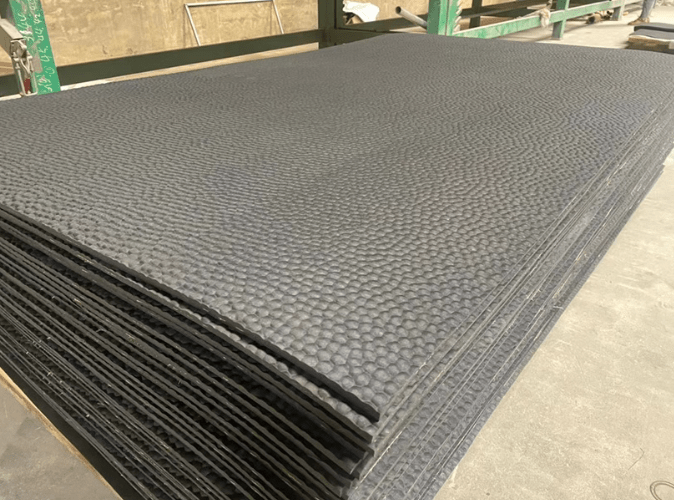
A lot of entry level stable mats are vulcanised or natural rubber, commonly with dimpled or patterned tops.
Those patterns exist for a reason. Many of these mats are firmer, so the texture is doing a lot of the work to create grip. In real stables and wash bays, urine and wash water can make textured surfaces slick, and as patterns wear down, traction can drop even further.
REGUPOL Equiline products are designed to be high grip in wet and dry conditions without relying on aggressive surface dimples as the only traction strategy. That is what creates a more stable working surface for horses and people.
What kind of rubber mats harden over time?
Budget vulcanised and natural rubber mats can become harder and less flexible as they age, especially with exposure to oxygen, ozone, heat and UV. That is a known ageing process in vulcanised rubber, and it is one reason long-term comfort and performance can vary so much between mat types.
REGUPOL Equiline undergoes a different manufacturing process. It is designed to remain safe, resilient, and permanently elastic over the long haul, helping keep the floor softer underfoot while still handling the daily challenges of high-use stables and wash bays.

Example above of bolted-down budget vulcanised rubber mats
Why do so many people choose REGUPOL?
Because it solves the day-to-day problems horse people actually deal with, without creating new ones.
• Permanently elastic comfort that supports hooves and joints and reduces fatigue from standing
• High slip resistance in wet and dry conditions for safer wash bays and stable rows
• Real hygiene advantages from sealed glue-down options that do not let water and grime hide underneath
• Heavy loose-lay options for natural bases that stay stable through weight and fit, not risky metal fixings
• Drainage-focused tile designs that help reduce moisture build-up and odour issues in stables
• Long-term durability in demanding equine areas, including wet zones and high traffic use
REGUPOL equine Flooring Products